
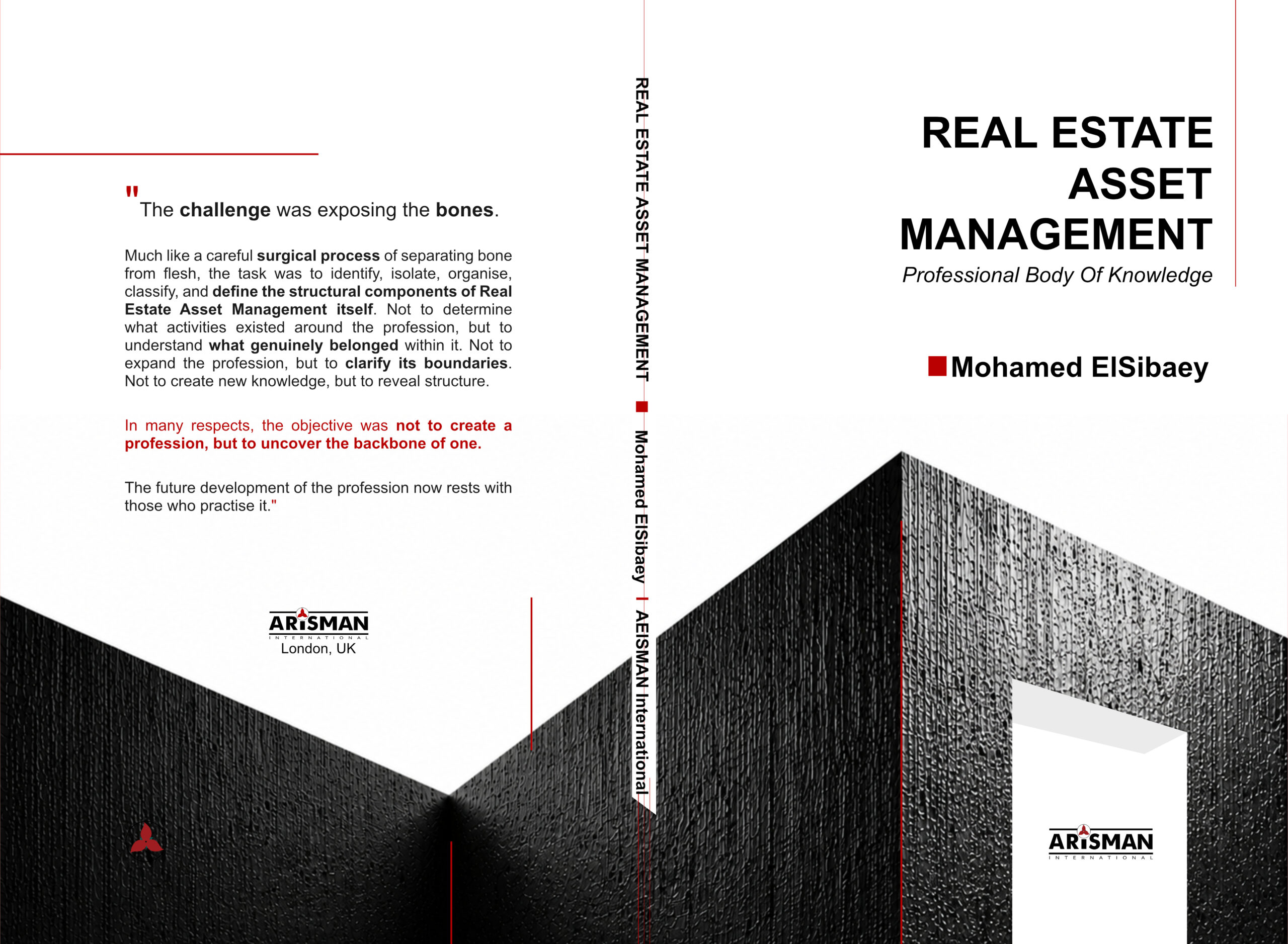
The case for a dedicated professional framework for real estate asset management — and why existing credentials were not designed to fill that gap.
Real estate asset management has existed as a practice for decades. As a defined profession — with its own competency framework, governance standards, and certification pathway — it has not.
This is not an oversight. It is a structural gap that reflects how the field evolved: absorbed partly into financial portfolio management, partly into property
operations, and partly into facilities administration. Each of these disciplines claimed a piece of the function. None of them claimed the whole.
The result is a profession practised widely but defined poorly. Practitioners enter it from different directions, carry different credentials, and operate without a shared language for what the function is actually supposed to achieve.
The REAM Body of Knowledge was built to address that gap.
Not as an academic exercise. As a practitioner’s attempt to define what real estate asset management actually is what it requires, what it produces, and how it should be governed at institutional level.
The framework covers the full scope of the discipline: asset management principles, lifecycle governance, operational integration, financial performance,
investment analysis, portfolio management, strategic planning, and professional practice.
It also addresses what most frameworks ignore: the application of artificial intelligence in institutional real estate asset management not as a future possibility, but as a present governance challenge.
The differentiation from existing credentials matters and is worth stating clearly.
RICS — the dominant global credential in the field is fundamentally a valuation qualification. It answers the question: what is this asset worth?
REAM answers a different question: how should this asset be governed over time to preserve and create institutional value?
These are not the same question. The profession has spent too long assuming they are.
Wrapping Up with Key Insights
— A profession without a shared body of knowledge cannot be governed, cannot be taught consistently, and cannot be held accountable to a common standard.
— The gap in real estate asset management is not a knowledge gap. It is a governance gap — the absence of a defined framework for what the function
is responsible for producing.
— AI is not a future consideration for asset managers. It is a present governance question: who is accountable for what the algorithm decides, and on what basis?
— The distinction between valuation and governance is not semantic. It defines the scope of the profession and the scope of the professional’s accountability.
— A Body of Knowledge is not a textbook. It is an institutional commitment to what
the profession stands for.
Leave a Reply